Small Spaces
A Compact Entryway That Can Handle a Wet Monday
Make room to arrive, sit, dry wet gear and get out the door without handing the hall over to storage.
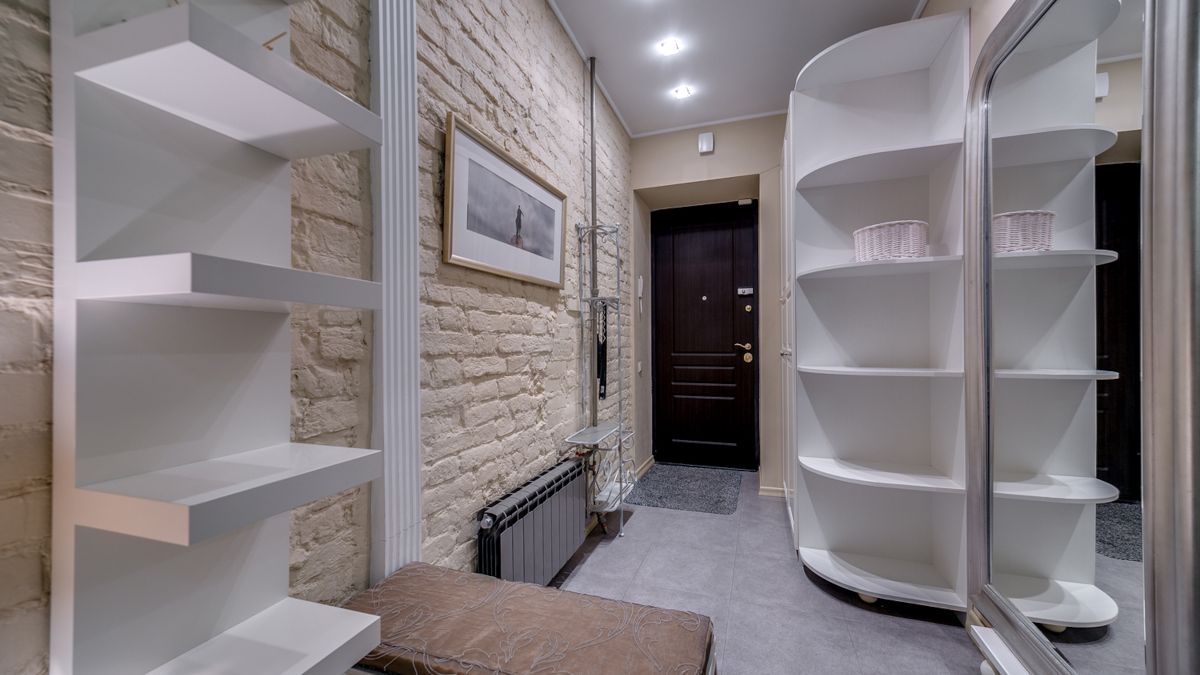
A hallway feels small when you arrive with your hands occupied. Keys must go somewhere before shoes come off. A wet coat needs a place where it can drip without touching a dry bag. Someone already inside must be able to pass you. The difference between a cramped hall and a workable one can be as little as finding a landing spot for the first object you want to put down.
For a compact entryway, prioritize clear passage, a reachable landing surface, and the capacity to deal with current-season shoes and coats. Store the rest deeper in the home. A bench is useful where there is space for a person to sit with feet forward while a door operates. A shoe cabinet is useful when it can open without forcing everyone behind it. These are two separate tests, and the photograph in a catalogue usually illustrates neither of them.
Separate the arrival from the storage problem
Stand outside with the door closed and walk in holding the usual load. Keep your hands occupied until you reach a place where the objects can be set down. This reveals the landing surface's natural location. It may be a shelf near the latch side or a tray slightly farther in, beyond the swing. For some households the counter in the kitchen works as a landing for shopping, but keys and a wet umbrella need separate destinations.
Follow the reverse trip before assigning space. People who leave the house with a bag, keys, a mask or sunglasses need to find the small objects after they have put on their shoes. A shelf down the hall is more likely to succeed for arrival when it can be used on departure too. A shared shelf can contain shallow divided trays so each person can identify a space. Treat documents that should leave again as part of a trip, not material for a standing pile.
Set a physical limit on storage and try to respect it for two weeks. Depending on the climate, a household may need one everyday coat and one wet-weather layer per person. If a coat hook row also contains travel bags, winter gloves in summer and several gifts you are waiting to return, each useful garment will become harder to dislodge. Most of the extra items can live in a closet or a pack-away bin.
Draw the path at full size
Sketch the hall, including trim, baseboards and radiator projections. Show how far the main door opens and where the handle comes to rest. If an interior door comes into the same space, draw the arc of that door too. A console depth measured flat across a room becomes a larger barrier if someone has to turn beside it with a backpack. Mark a proposed unit on the floor with removable tape and repeat your arrival test.
Depth figures for tipping shoe cabinets can be deceptive. You need the closed depth, the opened depth, and somewhere to put your body while you use a flap. Bulky shoes might exceed the depth of a compartment even if they fit through the opening. Borrow a box with the listed interior dimensions and try the widest footwear sideways and flat. A cabinet that can contain trainers may be unable to handle walking boots. Boots may do better at a tray with a mat while lighter shoes fill the upper storage.
If anyone uses a mobility aid or needs support to sit, test access with that person's help. Furniture can make sight lines flatter and space tighter at the same time. Select a purpose-built seat of suitable height and stability when sitting is a daily need. Cushion thickness and bench depth affect ease of standing. Follow manufacturer installation guidance, including anti-tip requirements for cabinets, and check with the property owner about wall fixings if you rent. A cabinet that requires anchoring is unsuitable wherever its anchors cannot be installed correctly.
Keep dry goods out of the drip line
Deal with wet coats and shoes as a small local drainage problem before hiding anything. A removable tray with a modest edge catches grit and water from footwear. Choose a size you can lift and rinse without spilling into the hall. An absorbent door mat can take some moisture off shoes, but it needs a chance to dry and should lie flat at the edge. Make sure any backing is compatible with the finished floor. Frequent moisture in a sealed cabinet can leave a smell and damage vulnerable finishes over time.
Leave wet outerwear where air can circulate. A coat packed tight beside three others often stays damp for longer than a coat with a bit of space around it. If the hall is regularly too crowded for breathing room, it may be better to dry the wet item temporarily in another well-ventilated place and return it after it dries. For a household with several wet-weather commuters, two nearby places for incoming gear can be easier to maintain than a single tidy rail.
Give umbrellas a stable container with a removable insert or an easy-clean bottom. Make sure sharp tips cannot reach people as they walk past. A fabric tote kept next to the front door can block water if it hangs below something wet, so place it higher or move it across the entry. Look for a separation of height and reach that fits the routine. You can give everything the same visual finish later.
Decide what to show
An open peg is fast and invites use. A shallow drawer keeps a small collection of objects from spreading across a surface. Mixing the two makes sense when a display of everyday clothing is tolerable and smaller objects need containment. A peg rail mounted low enough for children often works more smoothly than a shared high rail packed with adult coats. You can position a smaller bag hook where a long coat will remain out of the way.
Rather than extending a deep furniture piece down the hall, use a low-profile movable solution where appropriate. A wall-mounted shelf adjacent to a door must clear head and shoulder height for the relevant path. A small freestanding table only earns its place if it stays steady, including when bumped, and allows vacuuming beneath or around it. Finish the exposed edge with a shape or material that will not snag a sleeve. When the hall is already narrow, a flat tray on a surface beyond the hall can be a better answer than another shelf.
A mirror can help with departure and reflect more of the available light. Locate it so you can see from a useful distance before opening the door. Check whether direct reflection of an outdoor path, window or bare bulb is uncomfortable as you enter. Keep an eye on where a coat hanger will actually drop. A mirror partly covered by outerwear becomes a strip of extra shine and sheds its everyday purpose.
Make nighttime arrival legible
Turn off adjacent-room lights and enter through the front door as you would after dark. Look for the switch and see which piece of furniture you identify first. Light that lands on the functional surface or the floor can orient people faster than a dramatic fitting visible only overhead. In an exceptionally long hall, the route itself needs to remain readable on the way to the next switch.
Consider the two bad limits. Very dim light hides the floor and the things left on it. A bare bright source in someone’s direct view makes it harder to see the space behind the source. Diffuse orientation light can be enough as a secondary setting, with a brighter setting for cleaning and sorting. For changes involving installed fixtures or wiring, ask a qualified electrician about suitable locations and controls. Take a phone photograph from a typical sitting height when selecting a fitting. The camera can help catch exposed bulbs or a reflection you miss while standing.
A durable central area makes room for color elsewhere. Where the wall is marked by bags and elbows, choose a finish that can be cared for according to its product data. The upper wall can hold a more delicate surface because it gets less contact. If a narrow hall feels anonymous, a single contrasting wall plane near the door can be enough to distinguish the arrival zone. Paint it after you know where hands and hooks will fall.
Give the result a week of real use
Build a provisional version with furniture you own before ordering joinery. Move one chair in for the sitting test if there is enough space. Set a shallow dish where keys are likely to land and add a tray for footwear. Ask the household to make one routine change at a time and see what survives. A test that depends on everyone performing an unfamiliar ritual is a poor proxy for the final layout.
Review the setup after a rainy day. The most useful evidence is a small failure: a bag left on the floor where there seemed to be plenty of hooks, shoes that always sit in front of a neat shoe cabinet, or a coat that stays by the bedroom because the new peg is too far from the door. You may be able to move a hook or trade one drawer for an open basket. Once the layout supports the routine without reminders, use a consistent finish or repainted wall to pull it together. That order makes it easier to preserve the precious part, room for a person to come home.