Lighting
Better Light at the Bathroom Mirror
Find the beam, angle and controls that make a bathroom mirror useful from both a standing and a seated position.
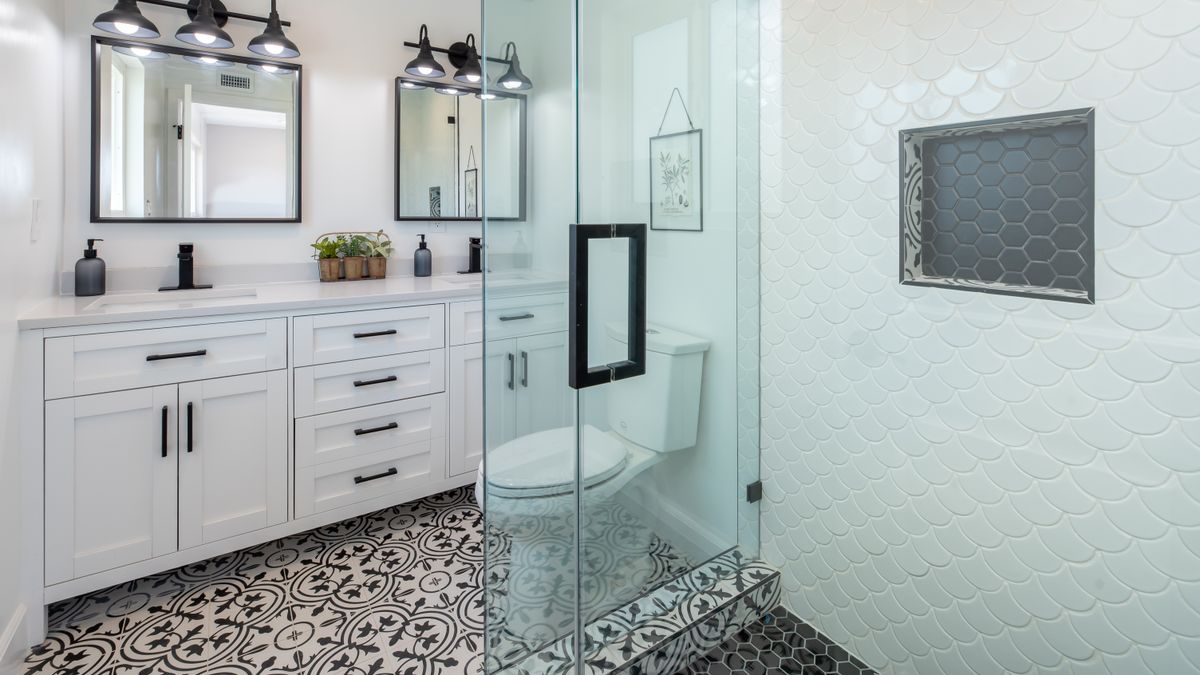
A light that makes the marble countertop sparkle can leave your face in shadow. This becomes apparent the first time you try to shave or apply makeup in a new bathroom and find yourself leaning so far forward that the edge of the basin gets in the way. The mirror shows a person and whatever light reaches them. You need to see that light on the person, from the actual distance they will stand or sit, before deciding what belongs above or beside the glass.
For a useful face light, give the face a broad source from the front or from both sides, with shielding that controls direct view of bright points. Provide enough general room light to see the path and the sink. Check both arrangements using appropriate fittings for the location and compare the color appearance under the same lighting. A bright strip around a wall or a ceiling spot near the basin can be part of the solution. Its effect depends on where its output goes.
Stand at the basin and find the shadows
Take a short inventory before moving anything. Look at the area underneath your eyebrows, the far side of your nose and the lower edge of your chin. Compare what you see with your usual position half a step back. A deep shadow from the ceiling might be fine while brushing your teeth and troublesome while seeing a small detail. Check the positions for anyone else who uses the mirror. Children, people sitting and unusually tall users can see a different part of the fixture or a different reflection.
Think of refinements as a gradual move of light toward the face. A strong source overhead can leave dark shadows under raised features. A broad source at the upper front can fill some of them. Taking light from both sides at an appropriate height often distributes it more evenly and gives control over the direct beam. These relationships are more helpful than a universal mounting dimension, because people, mirrors and sinks vary widely. Ask an electrician or lighting designer to account for the exact layout and applicable placement rules in wet areas.
Use a safe temporary trial away from water or compare a manufacturer's working display, keeping any portable equipment well clear of wet locations and following its instructions. Observe the change when a source becomes wider and comes toward the vertical plane of the mirror. Put someone in the usual position and stand at the door to check whether the fitting creates a strong glare. This separates the improvement for one person from a different problem for the next.
Compare the three common fixture positions
Side lighting is useful where the mirror has enough wall on either side. A pair of diffuse vertical lights can brighten the face from two directions. Long, gentle sources cover more positions and can reduce the need to optimize one height. A small fixture with visible bare lamps may create two bright points in peripheral vision. See the quality of the light and the fixture's projection in relation to the sink, the wall and any hinged cabinet.
An above-mirror bar can work well across a shallow vanity where the optics direct useful light forward and down. Try standing at the basin about where you normally do. A wide horizontal source may deliver more even coverage than a short fitting at the center, particularly for two people who use different sides of a large vanity. Where furniture and glass obscure the lower part of the fixture, check that enough light actually reaches the face. Look across the mirror from the door too, where a bottom slot may reflect brightly.
An illuminated mirror can deliver useful forward light or merely cast a halo onto a wall. Examine how the specific model is built. A backlit fitting can make a pale wall attractive and offer little light at the face. A broad front-emitting strip can help with grooming, subject to its output and glare. Check how it is controlled when the bathroom is dark and whether the user can reach the settings. Ask what can be serviced later and how the model is installed, especially if other fittings depend upon the mirror position.
Read the colors you really need to see
Bring familiar colors to a sample. The tiles often get all the attention, but skin, towels and ordinary bathroom objects are equally good tests. Distinguish whether a proposed source looks warm or cool from whether it represents colors pleasingly and consistently. A shade or diffuser can change the experience of a bulb. Watching the entire fitting in use gives better information than comparing a row of packages.
See warm and cool choices beside the intended white of the basin. Some fixtures that seem close in a showroom can look discordant when fitted side by side. Consider the other bathroom light sources used at the same time. You may like a slightly warmer light during a night visit and a different appearance at the mirror during the day. If the fixtures are meant to operate together, judge them together under the light conditions of your room.
Daylight can play a large role at one hour and vanish at another. If your mirror normally faces a bright window, check what you see of the outdoors from each position. A translucent blind or a change in how the window is presented can reduce extreme difference in brightness, while privacy needs may point to a separate layer. At night, look at the same mirror with only artificial light. The goal is control through the whole day, not a perfect appearance for the one hour with the best daylight.
Draw the mirror, basin and storage together
Make a simple elevation showing the mirror's full top and bottom, the sink, the height of the backsplash and the door or cabinet swing. Identify the centerlines of the places people actually stand. A basin that is off center within a cabinet may want the mirror centered on the basin rather than the cabinetry. A wide single mirror over two bowls contains a relatively empty area in the middle. Two task lights can improve that arrangement if each pool reaches the person it serves.
Glass and mirror edges can be affected by surrounding moisture and installation conditions. Follow the mirror maker's siting instructions and get the installer to resolve the wall and support. Take note of cleaning access beside fixtures and inside corners. A tiny gap behind a deep fitting can become hard to clean. If towels or a shelf are near the intended light, confirm they do not foul the location and that the item is appropriate for the space.
A medicine cabinet adds width and projection at face height. It can cast a shadow, require space to open and change where the glass sits relative to the wall. Hold something of the depth and size in the intended position and walk in from the door. Check whether a light bar clears its doors and distributes light around the face. Ask how backing, electrical work and other trades align before the wall closes.
Put general light and night light on sensible controls
Try leaving the mirror light off and entering the bathroom. Is the route clear and is the sink visible enough for ordinary use? Then try leaving the ceiling light off and using the mirror light. A room can work surprisingly well when a single good task light also illuminates its nearest surfaces. A deep bathroom or room with enclosed areas may need independent light for those spaces and for cleaning.
If you add a nighttime setting, give it enough output and placement to show the way to and from the door and relevant surfaces. A backlit mirror might supply a pleasant glow without making a threshold or a puddle visible. A separate low source may do the route better. Avoid assuming that a control that looks natural in a rendered drawing will be easy for guests. Use recognizable controls at clear points and ensure they work immediately when required.
If any fittings have dimming capability, test startup behavior, minimum output and differences in appearance. A touch switch on a mirror can be less convenient when the room is dark or when a user must lean across the basin to reach it. Ask a qualified electrician to check equipment and controls for the installation, including local electrical requirements and safe locations. Choose the simplest arrangement that delivers the everyday sequence you want.
Run the two-minute final trial
After dark, enter with the other room lights off. Approach the sink, check whether you can see the path behind you reflected in the glass and look at your face from two heights. Put an object on the counter and locate it under the daytime and nighttime settings. If you see an obvious reflection of a light source you might shift the mounting position or choose more shielding before the plan is approved. An uncomfortable beam usually gets more noticeable after you put your eyes in its path every morning.
Write down what you want for three modes: moving through, detailed mirror use and an ordinary late visit. Match them to actual fixtures and switches. Confirm the final product and dimensions together with the mirror and cabinet order. The plan can stay simple when each light has a defined place to land. The room will feel more finished because the face, floor and hands are all visible where they are meant to be.