Materials
Questions Worth Asking Before You Buy an Engineered Countertop
Compare samples, fabrication safety, seam placement and repair options before approving a countertop.
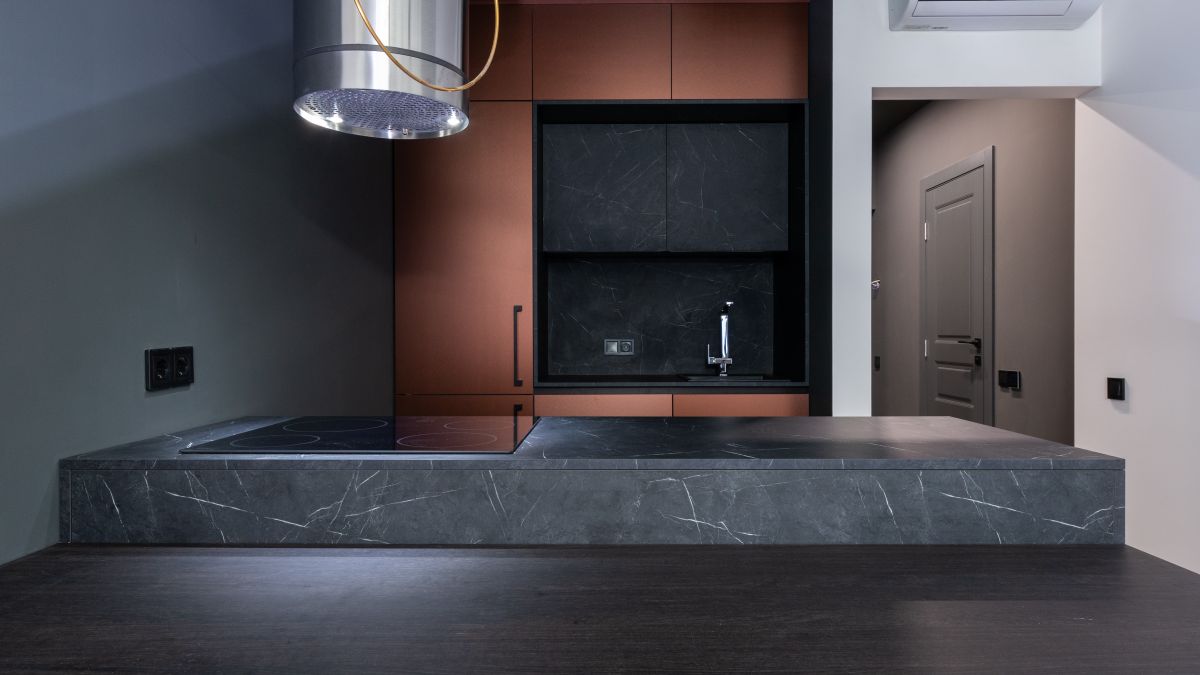
Countertop shopping begins with a piece of material small enough to hold in one hand. The finished surface has seams, cutouts, supports and edges that somebody has to make. It may be several times larger than the display and viewed from two rooms at once. A useful decision is about the material, the actual slab or sheet, the way it will be fabricated and whether someone can repair it when a pan finally lands on its weakest corner.
Make the shortlist by application. Ask each supplier to identify the specific material, intended uses, care limits and installation system. Compare a full-looking example or the actual slab before approving the design. Evaluate the fabricator, including where and how the work is done. The terms engineered stone and engineered countertop can cover different product families in conversation. An exact product name and technical sheet make the rest of the conversation significantly more concrete.
Establish the material and read its limits
An engineered quartz surface is commonly manufactured from a mixture containing mineral particles and a binder, with formulations varying by product. A manufactured porcelain slab, acrylic-based solid surface or sheet product built over a substrate belongs to a different family with its own installation guidance. A natural quartzite slab is a different material as well. Product names and visible patterns alone are unreliable for identifying composition. Work from the manufacturer's latest documentation for the code you are buying.
Ask how the manufacturer wants people to deal with a hot pan, coffee and everyday cleaning. A statement about resistance has meaning only within the conditions that support it. It can still be sensible to use a trivet and a cutting board in routine cooking. Check repairability at an edge, at a sink corner and in the middle of a field where any work will be visible. Ask whether the supplier can point to an example of the likely restored appearance. The answer can be a valuable piece of evidence in a busy kitchen.
Surface appearance deserves its own set of questions. A polished finish often reflects an outline of the window or task light. A low-sheen surface may show a different pattern of residue, depending on its texture and color. A bright sample under a store's diffuse lighting can conceal the maintenance behavior you would see in a sunlit kitchen. Put a sample in the intended horizontal position and see whether the neighboring cabinets, backsplash and task lighting affect what you notice.
Put worker safety in the buying decision
Fabrication can create respirable crystalline silica dust when products contain crystalline silica. The U.S. Occupational Safety and Health Administration has published guidance on exposure during countertop manufacturing, finishing and installation. In November 2026, federal OSHA commented on a California proposal to restrict some artificial-stone work. The letter discussed a proposal. For a purchase, ask a qualified fabricator which product and work rules are currently in force where the material will be cut and installed.
Ask prospective contractors to identify the specific material and where cutting and finishing will take place. Ask them to explain how they meet applicable worker protection requirements, how the product will be brought in without avoidable cutting in occupied areas and what they will do if an opening requires unexpected adjustment. Whether one answer feels reassuring is less important than whether the contractor has a coherent process. A description such as “we will deal with that on the day” provides little basis for understanding how a problem will be handled.
Avoid do-it-yourself cutting or grinding and leave fabrication and any required site work to appropriately equipped professionals. Review the delivery route and room readiness early so the fabricator can finish critical work in an appropriate environment. Keep the scope consistent if you change materials late. A worker-protection question does not disappear with a similar-looking surface, since risks and required methods depend on actual composition and tasks. Ask specific questions of the fabricator rather than drawing conclusions from a catalogue term.
Select the view that controls the pattern
Draw the counter from standing height and from the rooms into which it opens. At one end of an island, the grain may be seen lengthwise. In an open room it may run directly toward the sofa. Compare the pattern of the entire piece instead of relying on a small swatch with a single bright vein. An active pattern can help hide a busy work surface, and a quieter pattern can put emphasis on the joinery. Look at enough of the candidate to understand what it will do.
Where the supplier offers it, confirm the actual slab or full sheet and review a cut layout. Look for the relationship between patterns at a join, the transition to the splashback and where the hole for the sink will interrupt a strong feature. A visible line drawn across a render is an idealization. The fabricator can tell you what alignment and variation are achievable with available stock, cutting and project constraints. Sometimes moving the sink or changing the orientation of a pattern provides a better result than insisting on a particular vein match.
Check multiple surfaces in the intended relative position. An island and perimeter worktop can sit far enough apart to accept variation that looks obvious in the corner of an L-shaped run. A different finish on a backsplash may produce a deliberate contrast when the light comes from above. If both backsplash and counter come from the same material, ask what joints and edge details are physically feasible and how water-prone junctions will be treated.
Draw seams and edges before the cabinet order closes
A seam location can affect support, appearance and installation. Find out which spans, supports and finished overhangs the material and design require. Ask whether the seam corresponds to something visible underneath. A line at the center of a prominent work surface might be harder to accept than one near a cabinet break, but a convenient visual location will still need proper support and safe handling. Have the fabricator and cabinet supplier agree on the interface.
Work through the edges with an actual sample. A slight radius can change the way a thin material looks and feels. A thicker-looking edge can be made with a particular construction, and the joint and pattern can behave differently as they turn. A crisp edge may suit the style and may be more vulnerable to visible damage depending on material and location. Think about the edge people brush past while sitting and the edge near a sink, where heavy cookware is handled. Those two places do not necessarily call for the same decision.
A sink cutout needs both a clean visual result and correct installation. Ask whether the intended sink can be used with the product, how it is supported and what the visible reveal will be. Know which fittings must be available for measuring. Abrupt changes in a cutout or places with little material remaining can affect feasibility. The correct details belong with the fabricator, supplier and installer. They are easiest to coordinate when the fixtures and cabinets are already identified.
Compare installed costs and future options
Request prices on the same finished plan. One estimate may omit a high backsplash, a support system, preparation, delivery conditions or removal. A standard edge and one sink cutout can be readily comparable when both quotes state them and describe the same sink mounting method. If a crane or complex route is required, ask where its cost fits and who approves the setup. A job that matches the room also has to reach it.
Ask whether the material can support your likely future changes. For example, a different sink size might require replacement or specialist evaluation. A small amount of stored material can be useful in some repairs, subject to safe storage and later color match. Ask the supplier where a visible join could be made if a repair is required. A countertop may be able to last longer if decisions about appliances and fixed services preserve access.
If several suppliers are offering different finishes from the same collection, ask what material is actually available for the planned date and whether useful stock has been reserved. A labor offer may be dependent on a particular source of the slab. Confirm what happens if another slab is proposed after the template is complete, especially where a second piece must match. Paying for a visibly ordered pair means reviewing the specific pair.
In a small galley, schedule the sample visit while you can look from the doorway and from directly above the counter. A light-colored backsplash can make a polished dark edge especially visible on entry. If the worktop seam is at the near end, have the fabricator mark the planned place and orientation on a drawing. Ask from which position you are most likely to see it. This makes a visible compromise possible to approve before the work proceeds.
Hold on to the precise product code, approved layout and care instructions. Ask what is covered, who provides the installation warranty and how the parties handle finished discrepancies. A clear drawing with agreed seams and source material helps distinguish a meaningful departure from ordinary variation. Discuss the final work under the light in which it will be used.
The useful question at the end is whether you understand the full service: the material can be installed and cared for as intended, professionals can explain the fabrication arrangements, and you have seen enough area to judge its pattern. Compare that package with the cost and the handling your household expects. If any one of those parts remains vague, it is worth a question while there is still a choice to make.