Materials
White Oak Cabinetry Without the Sample-Board Surprise
Compare grain direction, sheen and finish samples before approving white oak cabinets for a real room.
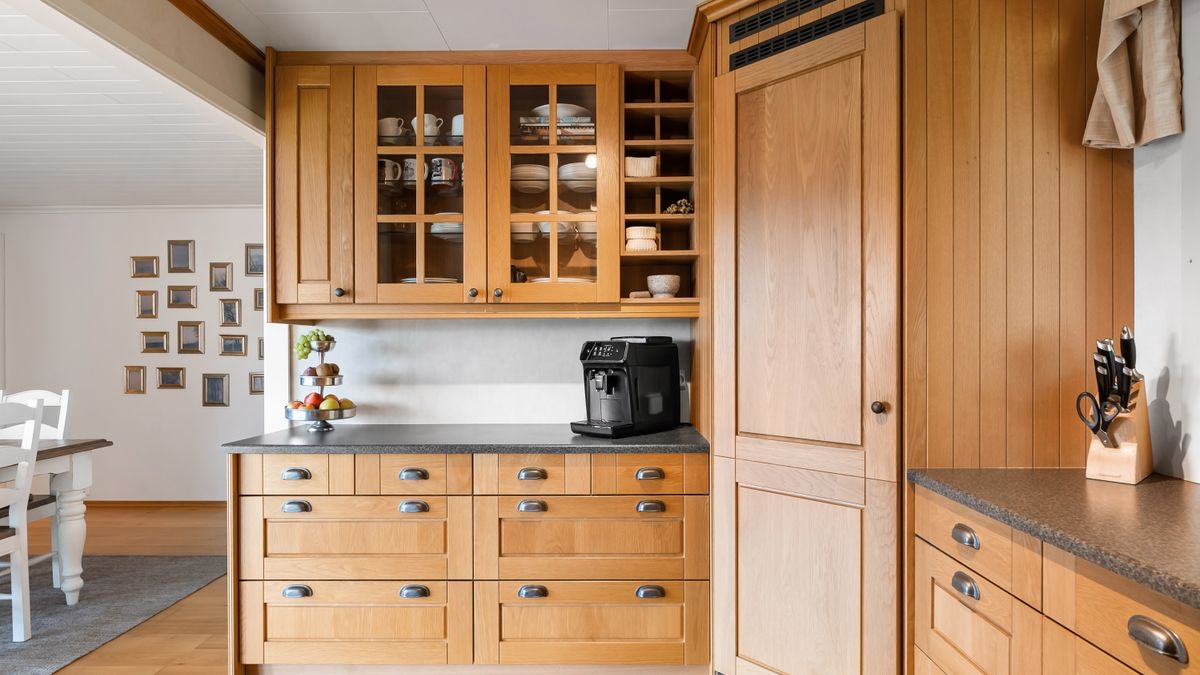
One small white oak sample can be a misleadingly quiet object. It probably contains a length of straight grain and one agreeable color. A wall of cabinets contains repeated seams, a pile of adjacent boards and enough surface area for the finishing decision to register from across the room. You approve one rectangle and live with a set of doors that meets a whole set of other materials at several angles.
White oak still has a place in current kitchen design. In the National Kitchen & Bath Association's late-2026 report release, it was the named wood choice among nearly half of surveyed designers. The designer response describes a market preference. It does not tell you whether the oak on display in a supplier's showroom will look the same in morning light in your kitchen. Ask the supplier for a representative assembly, finish it exactly as specified and view it alongside the floor, counter and paint before you place a final order.
Identify the grain you are approving
A clear label on a quotation matters more than the marketing name. Have the fabricator state the species or veneer specification, the cut and the construction of both doors and trim. Oak has pores, character and variation. Plain-sawn faces often exhibit the familiar broad arches. Rift-cut faces tend to show a relatively straight pattern, while a quartered surface may show conspicuous ray fleck. Exact appearance varies with the board or veneer and the cutting method. If you remember liking a kitchen for its fine vertical lines, communicate that reference in terms of the face you can see.
View the backs and edges of the offered doors. A solid edge can meet a veneered face cleanly and still display a different line of grain. In a slab door, a stable veneered panel can offer the broad, uninterrupted area people associate with modern oak kitchens. The appearance hinges on how a maker builds and finishes it. Restrain the urge to declare one type of construction universally better. It is more productive to ask what happens to a dent at the edge, what may be refinished and whether an individual replacement can be matched later.
Discuss orientation in the context of the whole elevation. Vertical grain on tall pantry doors strengthens the sense of height. Horizontal grain can tie adjacent drawer fronts together, but it highlights any abrupt break at the dishwasher or corner. A maker may offer sequence-matched veneer where several faces run in order from the same source. If visual continuity is important, confirm which faces are included and which breaks are intentional. On a small island, you may prefer to reserve the most coherent matching for the end visible from the living room.
Turn the sample into an assembly
There is a simple way to reveal how the doors work. Borrow two adjacent panels if available, or have one sample unit include a seam, the edge treatment, a pull and the intended cabinet color beside it. Position the panel vertically where the bank of cabinets will stand. Put a counter sample horizontally in front. If the project includes an oak floor, lay its sample below in its expected grain direction. The floor sees the light at a different angle and may catch much more of a window's reflection than the cabinet.
Photograph the group in the morning and after dark, then trust the in-person judgement. Cameras often compensate for color cast. They help retain the arrangement for future conversations, but can soften the difference you saw in person between two pale finishes. Ask another member of the household what changes across the day. Descriptions such as raw, honey, gray or pink are subjective. “This finish looks yellower beside the ivory floor at breakfast” pinpoints a relationship you can investigate.
Bring the fabricator a small collection of images to describe the amount of variation you want. One picture can show the average tone, and another can show the widest acceptable difference between doors. Oak grown and processed in real lots will vary. Approving a range makes it easier to judge a delivered kitchen fairly. Ask how conspicuous knots, mineral streaks and other features will be handled, and request that the approved limits and any exceptions be written down.
Choose a sheen you can live with
Sheen changes what you notice as you move. An almost matte finish can make a pale panel look soft from across the room. A glossier one makes the window legible on its surface and calls attention to fingerprints and small changes in flatness. Some very low-sheen coatings can show rubbed areas where hands repeatedly touch them. Look at the finish from straight ahead and from the angle you use when you pass the island. If you always reach for the refrigerator at an angle to the pantry, judge the pantry from there.
Have the cabinet shop explain the maintenance it expects for the selected finish. Ask which cleaner to use after oil splatters and how long to wait after installation before a normal wipe down. Some coatings can tolerate particular cleaners while others mark when exposed to them. A soft cloth and manufacturer-approved method have a better chance of preserving an even surface than improvising with a stronger product on a visible door. Test products only on a spare sample or in accordance with the fabricator's care instructions.
Check the high-contact places. The edge below a dishwasher and the door near a sink are likely to see damp hands. The face closest to a dining bench may see kicking or chair contact. A projecting pull can take more contact away from the finish but may catch clothing in a narrow passage. An integrated grip reduces projection and concentrates repeated touch in one spot. Put a sample in someone’s hands and make a useful choice from the trade-off.
Keep the rest of the room in the decision
If the floor and cabinetry are both wood, decide whether the difference will be deliberate. An almost identical pair can leave people hunting for the reason they do not match. A deeper floor and lighter fronts, or a quieter floor and distinct cabinet grain, may give the eye two clear surfaces. Variation over distance matters. In wide daylight the two samples may look fairly close, but a bright strip under a cabinet draws attention to whichever color is at the splashback and worktop.
Where the room receives mostly cool daylight, a clear or slightly warm oak finish may already read pale. In late afternoon sun it can look much more golden. A strongly tinted finish chosen under showroom lights may become heavy when installed. Try paint and stone in the same arrangement and look for which material shifts most. You can often keep a material you like by changing its neighbor. For example, once you see a pale natural oak sample beside an unexpectedly orange floor, a different floor tone may make the cabinetry decision easy.
Locate appliances, vents and metal accents in the match. A large refrigerator can separate a tall pantry from oven cabinets, making a carefully sequenced run less valuable on that wall. A visible timber end panel that turns ninety degrees may present a different shade because it catches light differently. Show these neighbors on an elevation before agreeing where the most exact grain matching is needed.
When the cabinetry touches an unusually dark wall or meets a pale tile at the corner, ask to see a piece with the edge finished and held in position. A cut edge can expose the build of a panel, and the surface around the corner may be made and finished in a different way. The cabinetmaker can explain which detail the drawing intends if the small mock-up reveals an abrupt change.
Leave a record for installation and repair
If you plan a shelf or cabinet with contrasting interiors, show how its face looks when the door is wide open. A strong color inside can throw warm or cool reflected light onto the edge of a pale front when two finishes sit close together. Since that door might be open during the busiest part of the day, its useful appearance includes more than an immaculate picture with the doors firmly closed.
Write down the product code or maker's finish system, sample approval date, finish sheen and which parts it applies to. Ask for descriptions or photos of the completed parts at the shop before delivery if the maker offers that step. Keep a representative finished sample in a protected location so there is a reference close at hand if you need a new pull or door. Stored pieces and installed doors may age differently, so a replacement may require visual matching based on the actual cabinet.
At installation, check the broad sequence with the door hardware in place. A bank of faces that looks unlike the agreed assembly is easier to discuss with a labeled photograph and the actual sample than with a verbal objection about color. Mark a suspected issue without damaging the finish and have the tradesperson look at it under the light you saw. Confirm that care instructions, spare hardware and any product warranties reach the person who will clean the space.
A good approval meeting ends with more than one oak square you liked under a lamp. It produces a documented expectation for what the faces look like together, how the finish behaves in your room and how to take care of it. Color and grain will vary across natural faces. Approving a realistic range makes that variation a designed part of the kitchen.